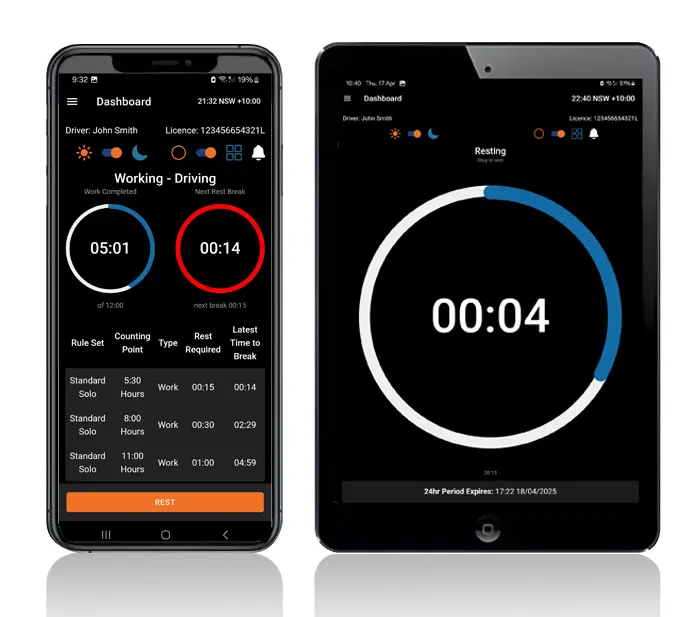
Understanding Log Book Rules for Australian Truck Drivers
Logmaster is a compliance system designed for Australian heavy vehicle operators and fleet managers who need to understand log book rules for truck drivers. Regulatory requirements are simplified through digital systems that handle Electronic Work Diaries (EWDs), real-time fatigue compliance, mass compliance, and Chain of Responsibility record keeping.
National Heavy Vehicle Regulator (NHVR) approved, Logmaster functions on Android and Apple devices across all Australian states and territories.
Understanding Log Book Rules for Truck Drivers Is Essential
The log book rules for truck drivers under the Heavy Vehicle National Law (HVNL) have changed significantly. What used to be a matter of keeping paper logbooks in order is now a much broader expectation of understanding truck driver log book requirements, documented processes, and demonstrable control.
For transport business owners and fleet managers, that means more admin, more exposure, and more pressure. Paper-based log books make it hard to know what is happening across your fleet in real time. Tracking driver hours manually leaves room for error. And when an audit comes around, pulling together evidence of your compliance with log book rules is slow and stressful.
Drivers, meanwhile, are carrying the burden of paper log books that take up time, get lost or damaged, and limit their legal driving hours compared to a digital system.
There is a better way.
Logmaster: Simplifying Log Book Rules for Australian Truck Drivers
Logmaster is a cloud-based digital compliance solution that helps Australian operators understand and comply with log book rules for truck drivers. NHVR accreditation as an Electronic Work Diary (EWD) ensures the platform satisfies legal requirements for replacing paper-based driver logbooks under the HVNL. The platform serves three key groups: heavy vehicle drivers, fleet managers handling record keeping, and transport business owners, each accessing purpose-built interfaces with specialised tools.
The guide covers log book rules for both paper and digital formats. It does not require proprietary hardware to understand, though digital systems can simplify compliance. The system works in areas with no mobile coverage and provides guidance on how to maintain accurate log book records.
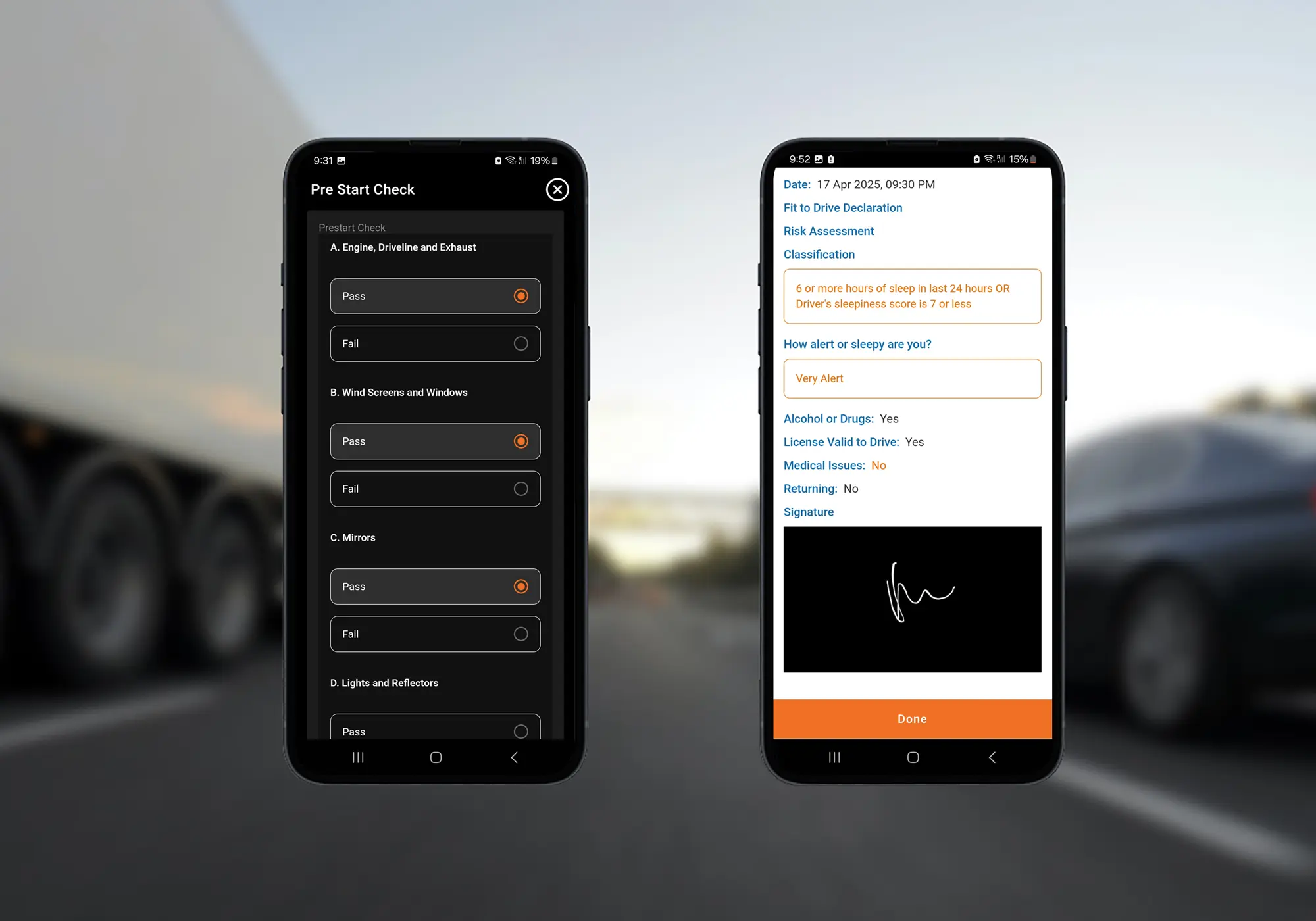
At its core, this resource explains log book rules for truck drivers and modernises the understanding of compliance processes around them, including fatigue management, mass compliance, vehicle pre-start checklists, driver fitness declarations, licence expiry alerts, incident reporting, and custom digital forms.
Understanding Log Book Rules for Accurate Time Recording
Logmaster helps meet log book rules for truck drivers by recording time in one-minute blocks rather than the 15-minute blocks used in older systems. This means drivers capture their time more accurately, which typically results in more legal driving time available each day when following proper log book rules.
Supports Sub-Contractors and Multi-Company Drivers Under Log Book Rules
Drivers who work for more than one transport company, or who operate as sub-contractors, must understand how log book rules apply to their situation. Log book rules for truck drivers fully support multi-company operations, which is particularly useful for businesses that rely on owner-operators or casual drivers.
Proper Documentation Under Log Book Rules
Log book rules require that log sheets are submitted to record keepers automatically each week without any action required from the driver. Digital driver fitness declarations, vehicle pre-start checklists, and custom forms replace paper-based processes across the business, reducing admin time and the risk of lost or incomplete records under log book rules.
Maintaining Log Book Rules Compliance Without Mobile Coverage
Australian transport routes often pass through areas without reliable mobile coverage. Log book rules compliance can be maintained in offline mode automatically, continuing to record all required data and syncing once connectivity returns. Drivers do not need to take any action for this to happen.
Audit-Ready Records Under Log Book Rules
Logmaster ensures proper adherence to log book rules for truck drivers by creating a complete, time-ordered record of driver activity, fatigue management actions, and interventions. When an audit occurs, the evidence of your compliance with log book rules is already organised and accessible. The platform is designed to meet the documentation expectations of the NHVR and the evolving standards of the HVNL.
Real-Time Visibility of Log Book Rules Compliance Across Your Fleet
Fleet managers and record keepers can see driver entries as soon as they are made. The system provides smart rest break notifications and alerts based on log book rules, so potential fatigue issues are flagged before they become breaches. This moves compliance from a retrospective review process to an active, real-time one.
Understanding Log Book Rules for Everyone in Your Transport Business
Heavy Vehicle Drivers
For drivers, understanding log book rules for truck drivers is essential. They must record their work diary entries, rest break alerts, fitness declarations, and vehicle pre-start checklists in accordance with log book rules. Because log book rules allow recording time in one-minute increments, drivers often find they have more legal driving time available compared to paper. Log sheets go to the office automatically, so there is no need to drop paperwork in at the end of a run.
Transport Business Owners
For business owners, understanding and enforcing log book rules for truck drivers addresses Chain of Responsibility obligations under the HVNL by providing a documented, verifiable record of compliance activity across the fleet. It reduces the administrative burden on office staff, makes audits less stressful, and demonstrates to the NHVR and enforcement bodies that reasonable steps are being taken to ensure log book rules compliance and prevent fatigue-related incidents.
Fleet Managers and Record Keepers
Fleet managers and compliance officers must ensure log book rules for truck drivers are followed across their operations. They monitor driver activity in real time, review records for log book rules compliance, manage alerts, and prepare for audits. The platform replaces spreadsheets and paper-based reporting with a centralised digital system. Licence and registration expiry alerts, an incident reporting system, and a paper workbook entry system for breach detection of non-log book user data are all included.
Trusted by Australian Transport Businesses for Log Book Rules Compliance
This comprehensive guide receives approval and endorsement from the National Heavy Vehicle Regulator (NHVR) as an authoritative resource for understanding log book rules for truck drivers. The guide applies throughout all Australian states and territories.
Heavy vehicle drivers across Australia, totalling in the thousands, follow established log book rules and comprehend their legal obligations. Transport businesses of every scale reference the guide, from independent owner-operators to major fleet operations.
The regulatory framework is structured around existing HVNL legislation and the NHVR's developing expectations concerning log book compliance rules, fatigue management, audit readiness, and Chain of Responsibility obligations.
Getting Started with Log Book Rules
Review the log book rules for truck drivers guide or contact your transport compliance team to discuss your fleet's requirements and understand log book rules obligations.
Access Logmaster through your Android or Apple mobile platform. For truck drivers needing logbook compliance, Logmaster provides tablets with truck mounting systems.
Drivers set up their profiles and begin recording their work and rest hours in accordance with log book rules immediately.
The Logmaster web portal provides fleet managers and record keepers with real-time driver activity monitoring, alert management, and compliance record review capabilities.
Log sheets are submitted automatically to your record keeper each week. Your compliance records for log book rules are centralised, up to date, and audit-ready at any time.
Frequently Asked Questions About Log Book Rules for Truck Drivers
What are log book rules for truck drivers, and why do Australian transport businesses need to understand them?
Log book rules for truck drivers are the legal requirements set out under the Heavy Vehicle National Law (HVNL) that govern how drivers must record their work and rest hours. In Australia, heavy vehicle operators are subject to these log book rules, which set out obligations around driver fatigue, Chain of Responsibility, and record keeping. Understanding log book rules helps businesses meet these obligations by automating record keeping, providing real-time visibility into driver activity, and generating the documentation needed for NHVR audits and enforcement.
Are log book rules for truck drivers approved by the NHVR?
Yes. Logmaster is accredited by the National Heavy Vehicle Regulator (NHVR) as a compliant Electronic Work Diary (EWD). This confirms it meets the legal requirements to replace paper driver logbooks under the HVNL. The platform works on Android and Apple smartphones and tablets throughout all Australian states and territories.
Can drivers comply with log book rules for truck drivers using digital systems?
Do log book rules for truck drivers apply in areas without mobile phone coverage?
How do log book rules for truck drivers relate to Chain of Responsibility?
Yes. Log book rules for truck drivers can be followed using digital systems that fully replace the paper logbook for heavy vehicle drivers who are subject to standard hours or basic fatigue management requirements under the HVNL. Drivers record their work and rest hours, fitness declarations, and other required information in accordance with log book rules. Log sheets are generated automatically and sent to the record keeper each week. It is important to note that drivers operating under Advanced Fatigue Management (AFM) or Exemption-based fatigue management accreditation should confirm whether their specific log book rules requirements are covered.
Yes. Log book rules for truck drivers apply even in areas without mobile coverage. Compliance systems can continue recording all required data when a vehicle is out of mobile coverage in accordance with log book rules. The system syncs automatically once connectivity is restored. Drivers do not need to take any action to maintain log book rules compliance.
Chain of Responsibility (CoR) is a principle established under the HVNL that holds multiple parties in the transport supply chain, not just drivers, legally accountable for heavy vehicle safety breaches, including fatigue-related offences. This includes employers, schedulers, consignors, consignees, loading managers, and others who have influence over how a vehicle is used. Understanding and enforcing log book rules for truck drivers helps transport businesses meet their Chain of Responsibility obligations by creating a documented, verifiable record of fatigue management activity, driver oversight, and compliance interventions. This record can demonstrate to the NHVR and enforcement bodies that reasonable steps were taken to ensure log book rules compliance and prevent safety breaches.
Ready to Ensure Your Fleet Complies with Log Book Rules for Truck Drivers?
Understanding and implementing log book rules for truck drivers makes it straightforward to stay on top of your NHVR obligations, keep your drivers safe, and have the records you need when an audit comes around. Thousands of Australian transport businesses and drivers have already made the switch to digital compliance with log book rules.