
Your HVNL chain of responsibility and the new Unfit to Drive duty
Since 1 August 2026, a driver must not drive a heavy vehicle while impaired by fatigue or otherwise unfit. Chain of Responsibility was not changed by the reform, but this new duty sits inside it: every HVNL chain of responsibility party must ensure its business practices do not cause or encourage a person to drive while unfit.
Amended HVNL commenced 1 August 2026. No grace period.

What changed on 1 August, and what did not
The 2026 reform did not rewrite Chain of Responsibility. It introduced a duty that CoR parties now have to manage, and it widened who that duty reaches.

What is new
- The duty covers fitness, not just fatigue
- It used to cover fatigue alone. It now takes in physical and mental health conditions, temporary illness, injury, and the effects of alcohol, illicit drugs and medication.
- It reaches every heavy vehicle over 4.5 tonnes
- The old fatigue duty applied to fatigue-regulated heavy vehicles over 12 tonnes. The fitness duty applies to all heavy vehicles over 4.5 tonnes, whether or not they are fatigue-regulated.
- Drivers are legally empowered to stop
- A driver who is unfit for any reason is required and empowered to stop or refuse to drive, and to tell their employer. The employer must then act on it.

What did not change
- Chain of Responsibility itself
- The reform did not change CoR. The Primary Duty to ensure the safety of your transport activities, so far as is reasonably practicable, is the same duty it was on 31 July.
- Work diary thresholds
- Work diary requirements were not extended to vehicles under 12 tonnes. Only the unfit duty reaches down to 4.5 tonnes. This is the most common misreading of the reform.
- Your existing duties
- The unfit duty operates alongside the rest of the HVNL and your work health and safety obligations. It replaces nothing and overrides nothing.
Who it applies to across the HVNL chain of responsibility
The duty splits in two. Drivers carry a duty about their own fitness. Businesses carry a duty about the conditions they create.
Drivers of any heavy vehicle over 4.5 tonnes
Drivers must be fit before they start, monitor their fitness during the shift, and stop if that changes. Drivers are not CoR parties, but they hold their own duties under the HVNL, and this is one of them.

Every party from the employer to the receiver of the goods
Each party must ensure its practices do not cause or encourage someone to drive while unfit, and must empower drivers to stop when they need to. Executives must exercise due diligence to see the business meets that duty, and subcontractors and customers setting your delivery windows are inside the chain too.

| Vehicle | Unfit to Drive duty | Work diary |
|---|---|---|
| Heavy vehicle over 4.5 tonnes, not fatigue-regulated | Applies. This is what the reform widened. | Unchanged. The reform did not extend work diary requirements to these vehicles. |
| Fatigue-regulated heavy vehicle over 12 tonnes | Applies, as it did for fatigue before. | Unchanged. Work diary obligations continue exactly as they were. |
How the two thresholds sit next to each other after 1 August 2026.
Your obligations in practice
The duty on a CoR party is about business practices, not paperwork. These are the places the new duty most often bites in a real operation.

Take fitness out of your scheduling assumptions
If a run only works when every driver is at full capacity every day, the schedule itself is the pressure. Build in the slack that lets someone hand back a shift.

Make stopping safe commercially, not just legally
Drivers read incentives before they read policies. Check that no bonus, penalty or informal expectation makes calling it costly.

Give drivers a pre-shift check worth doing
The NHVR is explicit that a self-assessment should support genuine reflection and not be treated as a compliance exercise. A tick box everyone completes in four seconds tells you nothing.

Train whoever takes the call
When a driver rings in unfit, the response is the compliance moment. Requiring someone to start or keep driving while unfit is prohibited under the Primary Duty.

Stop treating a licence medical as proof
Being medically fit to hold a heavy vehicle licence does not mean a driver is fit to drive at a given moment. A current certificate is not a defence for that shift.

Cover your lighter fleet
Rigids and service vehicles over 4.5 tonnes are inside this duty even though they carry no work diary obligation. Most operators have never had a fatigue conversation about them.
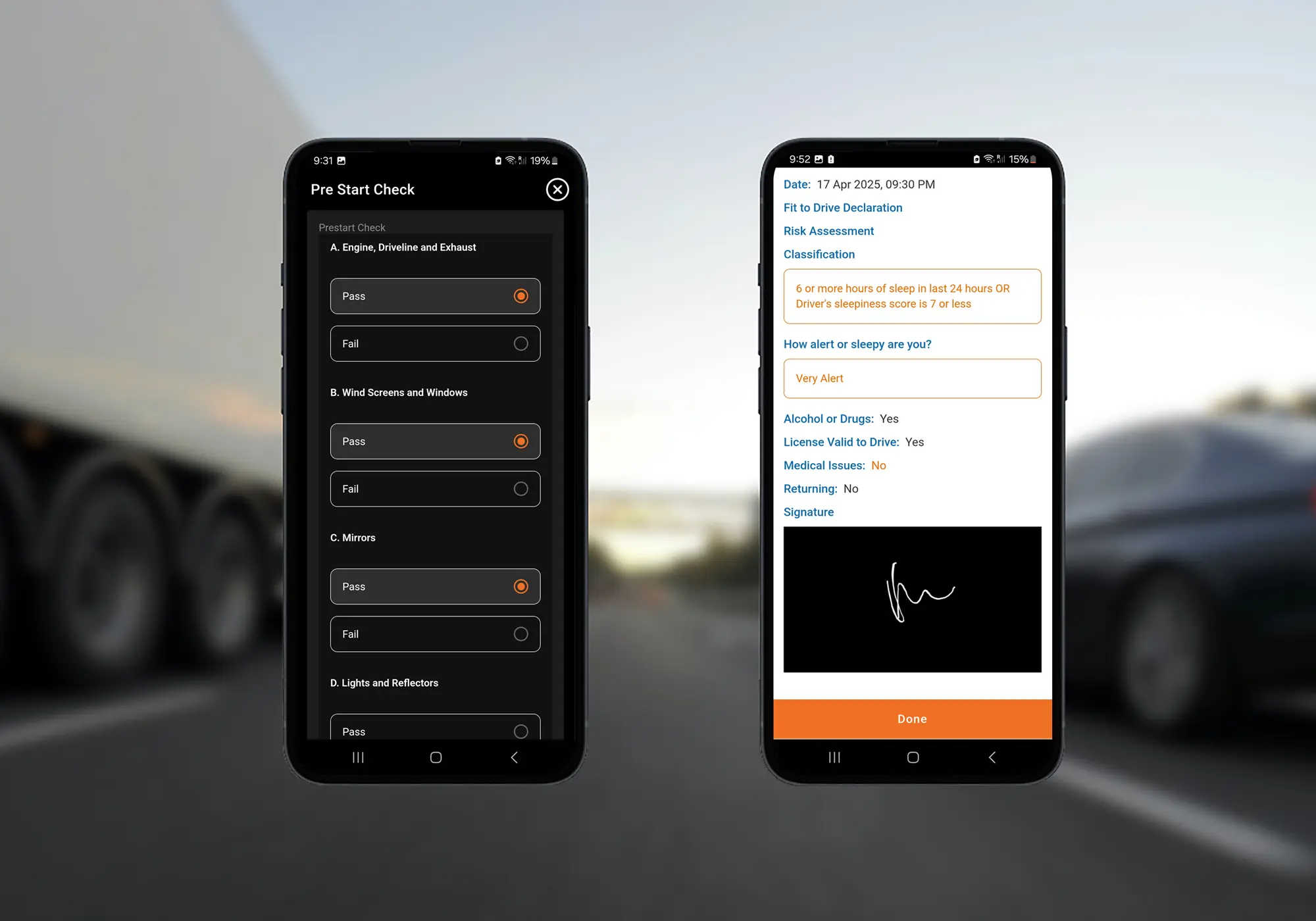
The evidence is the part you keep
Your HVNL chain of responsibility position rests on what you can show later: schedules, the record of a driver standing down, and what you did next. Logmaster's electronic work diary keeps that evidence in one place. Ask for info if you want to see how it fits your operation.
Frequently asked questions
Did Chain of Responsibility change on 1 August 2026?
No. Chain of Responsibility was not changed by the 2026 reform. The parties in the chain, the Primary Duty to ensure safety so far as is reasonably practicable, and executive due diligence all continue as before.
What changed is that a new duty now sits inside that framework. Because CoR parties must ensure their business practices do not cause or encourage a person to drive while unfit, the Unfit to Drive duty creates fresh obligations for parties whose CoR position itself has not moved.
Which vehicles does the Unfit to Drive duty apply to?
All heavy vehicles over 4.5 tonnes. This is wider than the duty it expands on: the previous duty not to drive while impaired by fatigue applied to fatigue-regulated heavy vehicles over 12 tonnes.
In practice that pulls a class of vehicle into scope that many operators have never treated as a fatigue or fitness risk, including lighter rigids and service vehicles that sit between 4.5 and 12 tonnes.
Do vehicles between 4.5 and 12 tonnes now need a work diary?
No. Work diary requirements were not extended to vehicles under 12 tonnes. Only the unfit duty extends down to 4.5 tonnes.
This is the single most common misreading of the reform. The two thresholds are separate: a 6 tonne vehicle is inside the Unfit to Drive duty and outside the work diary regime at the same time, and both statements are correct.
Can a driver refuse to drive because they are unfit?
Yes. A driver who is impaired by fatigue or otherwise unfit is legally required and legally empowered to stop or refuse to drive. They should tell their employer, and the employer is then responsible for acting on it.
For the business, the obligation runs the other way: a CoR party is prohibited under the Primary Duty from requiring a driver to start or continue driving when they are unfit to do so. Pressure applied at that moment, however informal, is where an HVNL chain of responsibility breach usually starts.
If a driver holds a current medical certificate, are they fit to drive?
Not necessarily. States and territories set medical fitness requirements for licensing, but being medically fit to hold a heavy vehicle licence does not mean a driver is fit to drive at any given point in time.
A driver with a valid certificate can still be unfit on a particular day through a medical episode, an injury, a temporary illness such as the flu, emotional distress, or the side effects of new medication. Fitness is assessed shift by shift, not annually.
Get your records ready for the amended HVNL
Logmaster is an NHVR-approved electronic work diary built for Australian operators. Talk to the team about fatigue records, driver declarations and the evidence your chain of responsibility position depends on.
Keep reading
The full picture of what the amended law altered, beyond the fitness duty.
What operators need to do nowThe practical preparation list for the mid-year commencement.
NHVR complianceHow record keeping, oversight and reporting fit together day to day.
The fatigue duty this new obligation expands on, explained in full.
Safety management systemsWhere a fitness to drive process belongs inside your wider SMS.
NHVR work diaryWho needs one, what it records, and why the 12 tonne threshold still stands.
Sources: NHVR, Unfit to Drive and HVNL reform implementation. This page is general information about the amended Heavy Vehicle National Law and is not legal advice.