With the Heavy Vehicle National Law (HVNL) Amendment Bill 2025 set to commence in mid-2026, the transport industry is facing a significant shift in how safety is regulated. One of the most important updates is the expansion of driver health obligations from simply managing “fatigue” to a much broader duty to be “fit to drive”.
For Logmaster users, however, there is no need to change. The tools needed to manage this new regulatory landscape are already built directly into your Electronic Work Diary (EWD). None of this is new functionality—existing Logmaster users can simply continue using these proven services to stay compliant.
The Shift from “Fatigue” to “Fit to Drive”
Historically, the law explicitly required heavy vehicle drivers not to drive while impaired by fatigue. However, the 2026 reforms introduce a new, expanded duty that makes it an offence to drive a heavy vehicle while “unfit to drive” for any reason.
Under the new law, this expanded duty covers a broader range of situations, such as physical and psychological ailments, injuries, or temporary illnesses. Drivers are legally empowered and required to cease driving if they are unfit. The stakes are incredibly high: a driver caught driving while impaired by fatigue or unfit to drive faces a maximum penalty of $20,000. Furthermore, Chain of Responsibility (CoR) parties must ensure their business practices do not cause or encourage a driver to drive whilst unfit.
A Tailored Experience: Protecting Drivers
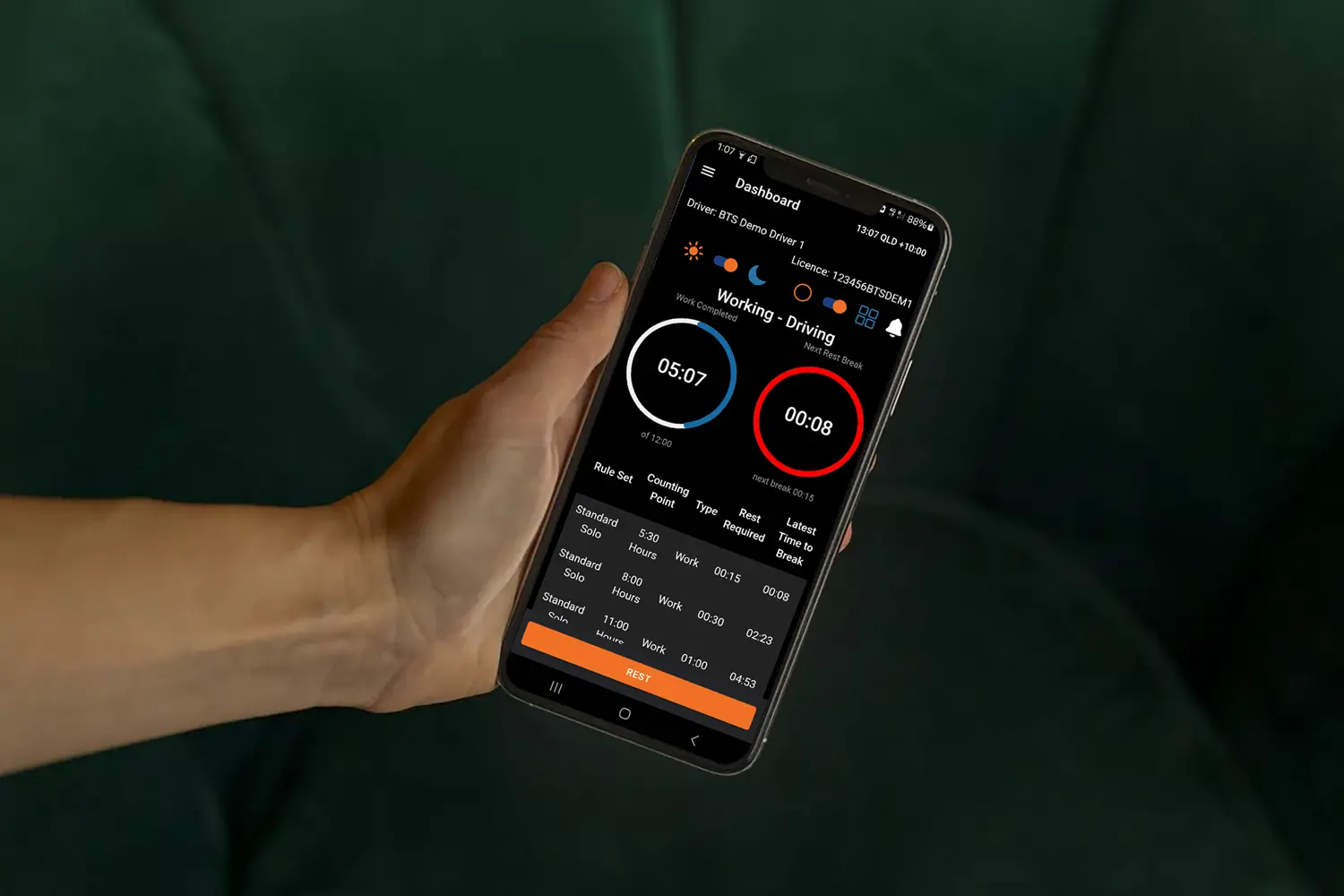
The 2026 Master Code of Practice stresses that self-assessment is a basic element of fatigue and health management, and that it should begin before a worker even starts work. Logmaster manages this seamlessly by putting a “Fit to Drive” form directly into the EWD start-of-day workflow. Before logging their first Work event of the day, the driver is prompted to consciously assess their physical, mental, and emotional health.
Crucially, drivers who are linked to and logging for a particular business receive that specific business’s customised form. This means transport operators can tailor the questions to suit their unique operational risks, ensuring drivers are evaluating the exact health and safety metrics relevant to their daily tasks.
Closing the Loop: Protecting the Business (CoR)
The new laws reinforce the need for employers to have systems in place which allow drivers to assess and declare they are unfit to drive. Logmaster provides exactly the systemic controls required:
- Instant Visibility and Alerts: When a driver completes their customized “Fit to Drive” form, the business automatically receives a copy. If any forms are submitted with a failed status (i.e., the driver declares they are unwell, overly fatigued, or otherwise unfit), the business receives an immediate alert.
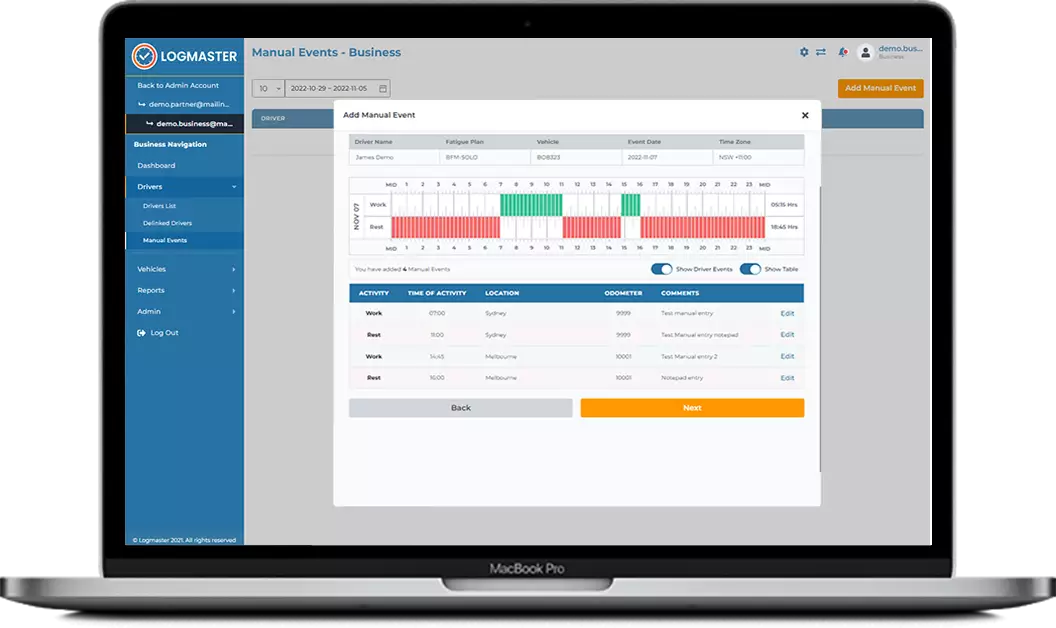
- Integrated Internal Investigations: A failed status isn’t just a notification; it’s a workflow trigger. These alerts can be directly linked to internal investigations within the Logmaster platform. This allows the back office to securely document the incident, record the actions taken (e.g., swapping the driver, adjusting the schedule), and maintain a clear audit trail proving that the business acted responsibly.
- Proof of Due Diligence: This provides a daily, timestamped digital record proving that the business proactively asks drivers to assess their fitness, directly satisfying the Master Code’s expectation to empower employees to assess their fitness for work.
The Bottom Line
The 2026 HVNL reforms require a proactive, preventative approach to managing driver health and fitness. While the new laws might seem daunting to some, Logmaster users are already equipped for the future.
By continuing to utilize the customised “Fit to Drive” forms, real-time alerts, and integrated investigation tools already available in Logmaster, you can ensure your drivers are prompted to put their health first, while providing your business with the exact safety controls required by the updated HVNL.