With the Heavy Vehicle National Law (HVNL) Amendment Bill 2025 set to take effect in mid-2026, the stakes for heavy vehicle compliance have never been higher. While the new laws reduce financial penalties for minor administrative errors, they take a zero-tolerance approach to record manipulation.
The maximum penalty for making false or misleading entries in a work diary has doubled to a staggering $20,000. The same $20,000 penalty now applies to defacing work records, possessing false records, or tampering with an approved electronic recording system.
For drivers, a simple miscalculation or a moment of panic leading to a “fudged” logbook entry can now be financially devastating. This is where the transition to Electronic Work Diaries (EWDs) and the active involvement of a back-office record keeper become a driver’s best safety net.
Here is how record keepers, armed with a real-time view of EWDs and vehicle telematics, can help drivers stay compliant and avoid massive fines.
1. Calling out Location and Odometer errors
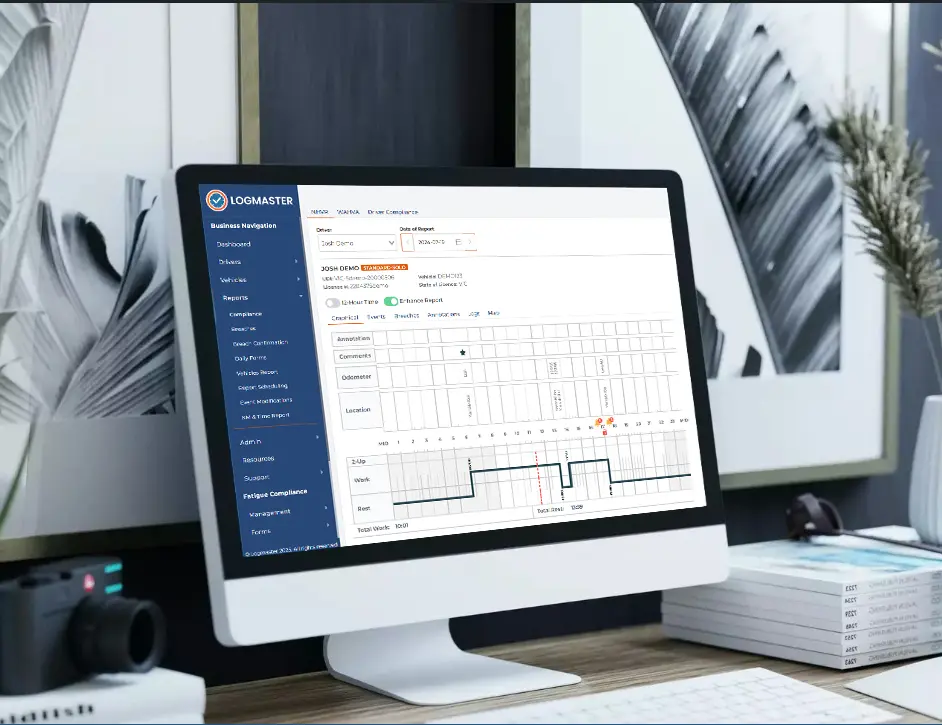
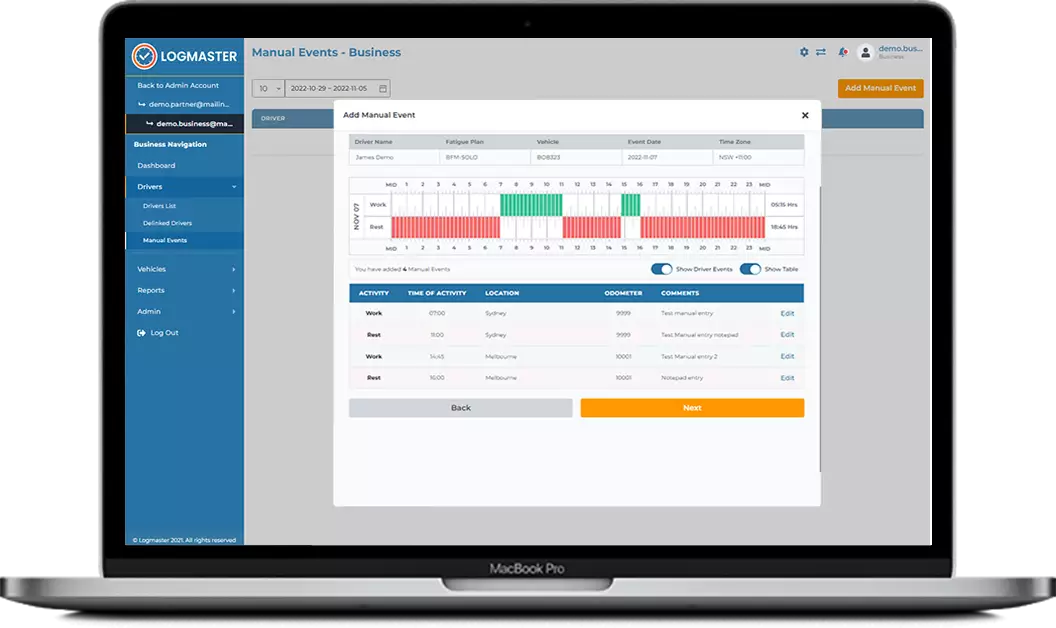
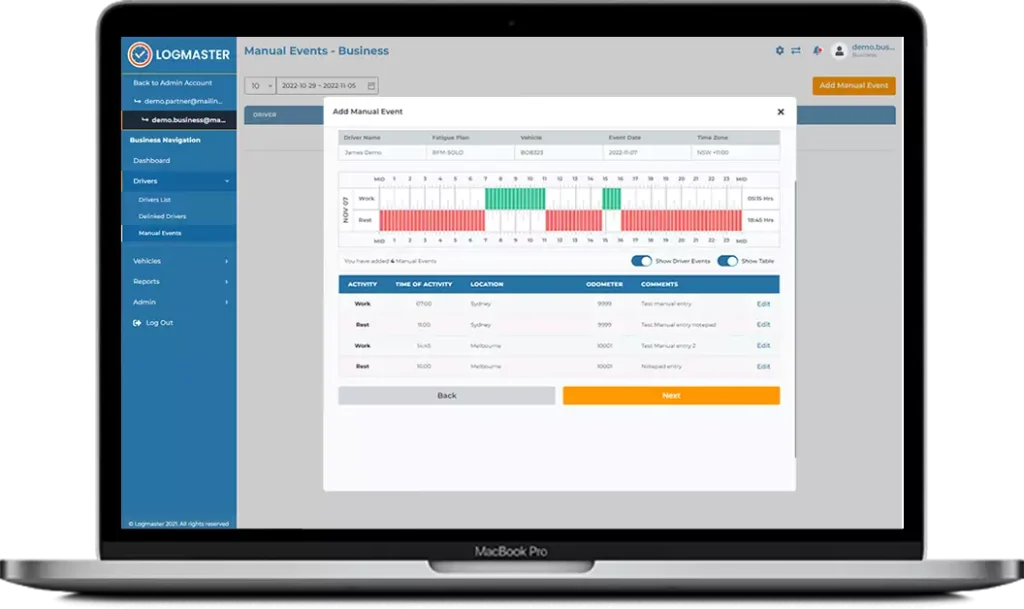
Under the EWD Standards, electronic diaries automatically use Global Navigation Satellite Systems (GNSS) to log the longitude, latitude, and human-readable location of the vehicle during work and rest changes. They also allow for odometer readings to be automatically pulled from the vehicle’s measurements.
When record keepers have a real-time view of this data, it allows them to better support their drivers. In the past, a driver using a written work diary might accidentally write down the wrong town or misread their odometer, which an Authorised Officer could later interpret as a “false or misleading entry.” With EWDs streaming verified GNSS data directly to the record keeper, the record keeper or scheduler using a quality telematics service in tandem can ensure the driver’s logged locations perfectly match the vehicle’s actual physical movements, removing the risk of accidental falsification.
2. Spotting Discrepancies Before They Become Breaches
A record keeper must have access to a driver’s work records to fulfill their regulatory obligations. By cross-referencing a driver’s live EWD status with real-time vehicle movement data (such as telematics or GPS tracking), record keepers can act as an immediate second set of eyes.
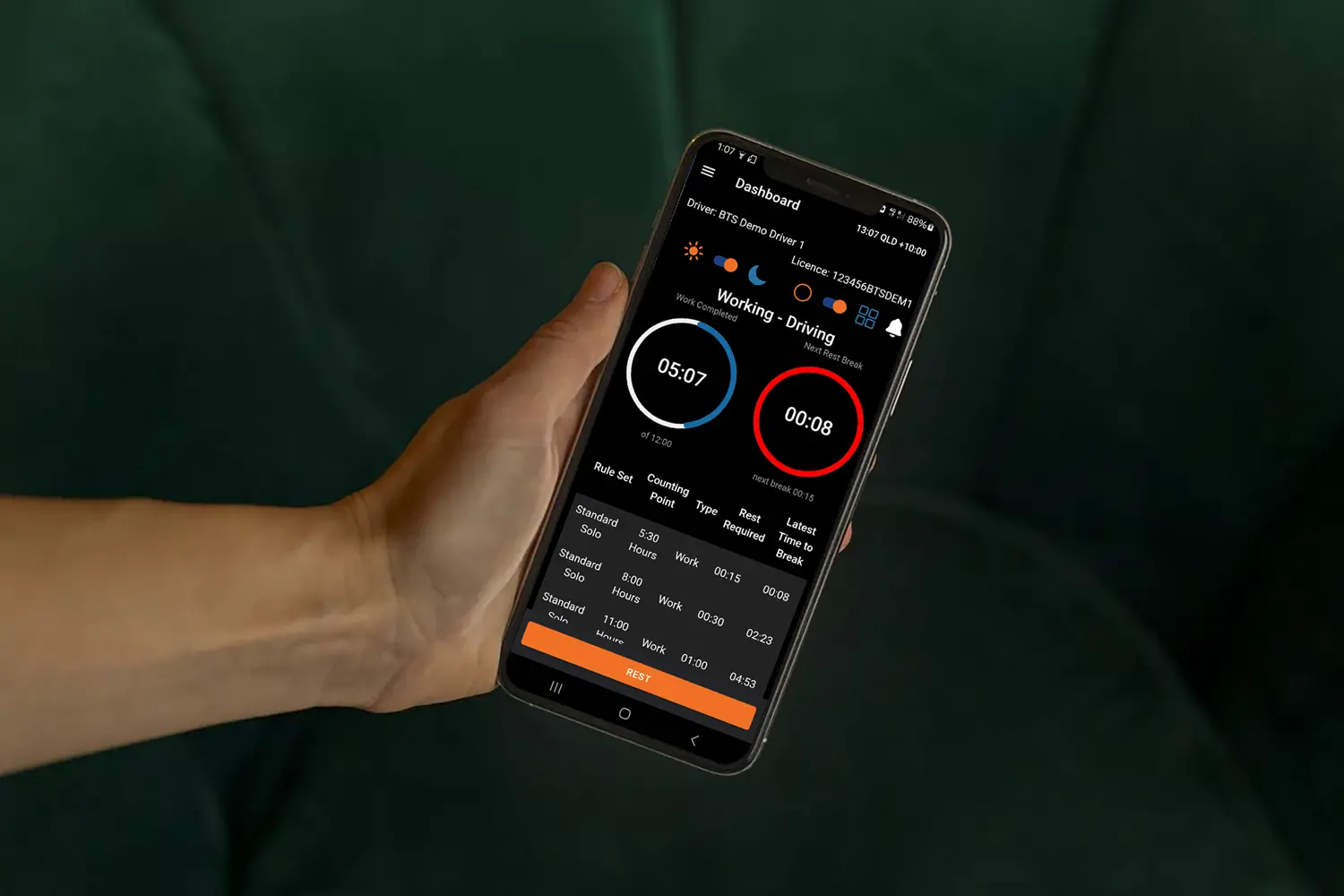
If a vehicle is moving at 100 km/h on the highway, but the driver’s EWD is accidentally still set to “Rest,” the record keeper can spot this anomaly instantly. Instead of the driver driving for hours with a fundamentally false logbook—which carries a $20,000 fine—the record keeper can contact the driver immediately to correct the unconfirmed entry before the end-of-day sign-off.
3. Supporting the New “Fitness to Drive” Duty
The 2026 HVNL updates introduce a strict new duty for drivers to avoid driving when “unfit to drive”—which covers physical, mental, and emotional health, not just fatigue.
Record keepers using Fatigue and Distraction Detection Technologies (FDDT) can monitor real-time outputs from alongside EWD data. If a camera detects microsleeps, the record keeper receives an alert. Instead of the driver pushing through exhaustion, even if legal, or potentially falsifying their EWD to complete a run, the record keeper can intervene. They can direct the driver to pull over safely and log a legitimate rest break in their EWD, ensuring both the driver’s safety and the absolute accuracy of their legal records.
Outcomes
The transition from paper logbooks to Electronic Work Diaries is about much more than digitizing paperwork. It transforms record-keeping from a solo, end-of-the-day chore into a collaborative, real-time safety system. By actively monitoring EWDs and vehicle movements, record keepers provide a vital layer of protection, ensuring drivers return home safely while shielding them from the HVNL’s severe new penalties for false entries.