
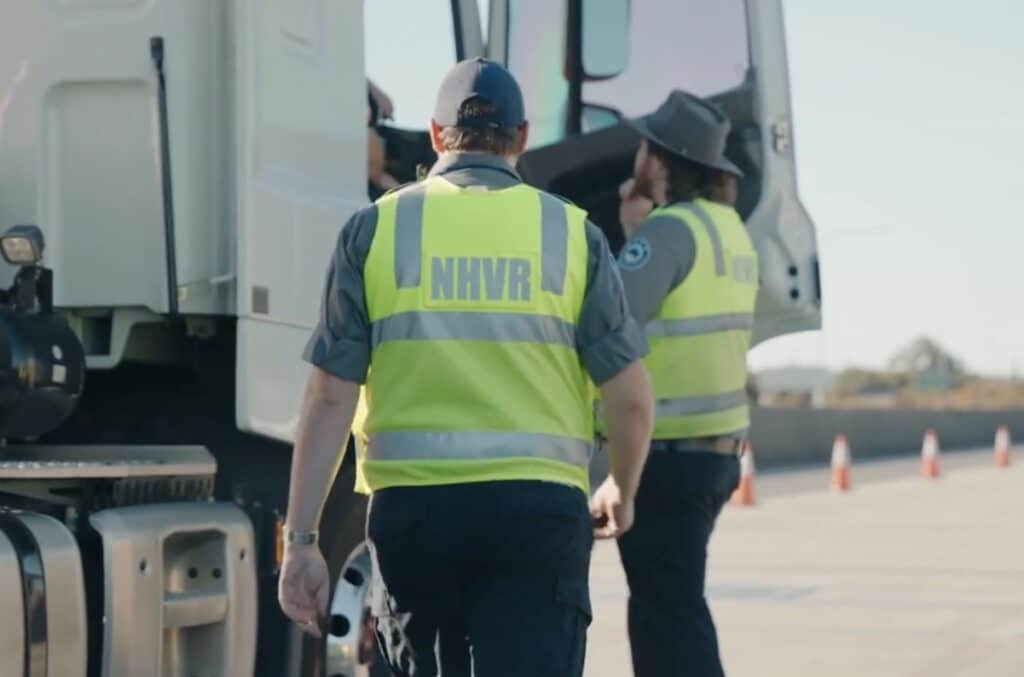
For many years, parts of the heavy vehicle industry have operated under fatigue-related exemptions. Some removed the requirement to keep work diaries. Others modified how fatigue was recorded or managed. In practice, these exemptions created parallel systems inside the Heavy Vehicle National Law (HVNL): one prescriptive, one discretionary. That structure is coming to an end. Not because exemptions have been formally cancelled, but because the legal and enforcement environment they relied on no longer exists.
The HVNL has shifted from rules to responsibility
The most important change under HVNL reform is not a new rule. It is a change in what regulators expect to see when assessing compliance.
Historically, compliance was demonstrated through artefacts:
• a completed work diary
• a written policy
• a stated procedure
If those existed, enforcement often stopped there. Under the reformed HVNL, the focus is now on systems of assurance. Regulators are increasingly concerned with whether a business can show that it actively manages fatigue risk in real time, at scale, and in a way that can be verified after the fact. The central question has shifted from: “Did you meet the rule?” to: “How did your system identify risk, and what did you do when it appeared?” That shift applies regardless of whether a business previously relied on an exemption.
Exemptions were always conditional — now the conditions matter
Fatigue exemptions were never a blanket removal of responsibility. They removed specific prescriptive requirements, not the underlying duty of care.
Under HVNL reform:
• the primary duty of care is non-delegable
• it applies across the chain of responsibility
• and it cannot be overridden by administrative exemptions
An exemption may reduce or remove a requirement to keep a particular record, but it does not remove the obligation to manage fatigue risk, nor the obligation to prove that reasonable steps were taken.
This creates a structural problem for exemption holders:
• many exemptions describe what is not required
• few describe what must be done instead
In a modern enforcement environment, that gap is no longer tolerated.
The evidentiary bar has moved
In the event of an audit, investigation, or serious incident, regulators are now looking for evidence of a functioning system, not a statement of status.
Typical questions include:
• How did you know when fatigue risk emerged?
• What data were you monitoring?
• How were discrepancies identified?
• Who was alerted?
• What action was taken?
• Where is that decision recorded?
An answer that relies on exemption status alone does not address those questions. This is why many long-standing exemption arrangements now feel fragile. They were designed for a time when enforcement relied on discretion. Today, enforcement relies on proof.
Why paper and informal systems no longer hold up
Even where businesses have strong safety cultures, informal or manual systems struggle under scrutiny because they cannot show:
• continuous monitoring
• independent corroboration
• timely intervention
• or a clear audit trail
Paper-based approaches are particularly weak when regulators compare what a driver declared with what actually occurred operationally. Without digital data, that comparison is either impossible or unconvincing. As a result, exemptions that once reduced administrative burden now increase legal exposure.
Digital systems have become the default language of “reasonable steps”
HVNL reform does not mandate specific technologies. However, it implicitly raises expectations about the quality of evidence required to demonstrate compliance.
In practice, this means:
• time-stamped records
• system-generated alerts
• independent data sources
• documented responses
• and consistent application across fleets
Electronic systems make this achievable. Paper and ad-hoc processes do not. This is why many operators who were previously exempt are now reviewing their digital strategy. They are not responding to a new rule; they are responding to a new burden of proof.
Exemptions are not disappearing but they are no longer protective
Exemptions are not being universally revoked. However, their practical value as a shield against enforcement is diminishing rapidly.
In a post-reform HVNL environment:
• an exemption without a supporting system increases risk
• an exemption without digital evidence is difficult to defend
• and an exemption without documented response processes may fail entirely
From a regulator’s perspective, the question is no longer: “Were you exempt?” It is: “How did you manage fatigue risk, and can you prove it?”
What this means for the industry
Across the industry, we are seeing:
• longer internal reviews
• increased legal involvement
• slower decision-making
• preference for integrated digital platforms
This is recognition that the compliance landscape has changed.
The direction is clear
HVNL reform is converging on a single principle: Compliance is no longer about having exemptions or records. It is about demonstrating that your system identifies risk and responds. In the coming regulatory environment, exemptions do not get cancelled. They simply stop being sufficient.